


Abandoned Valley: 2,000-Hectare Wilderness Exclusively Operated by Moc Nam
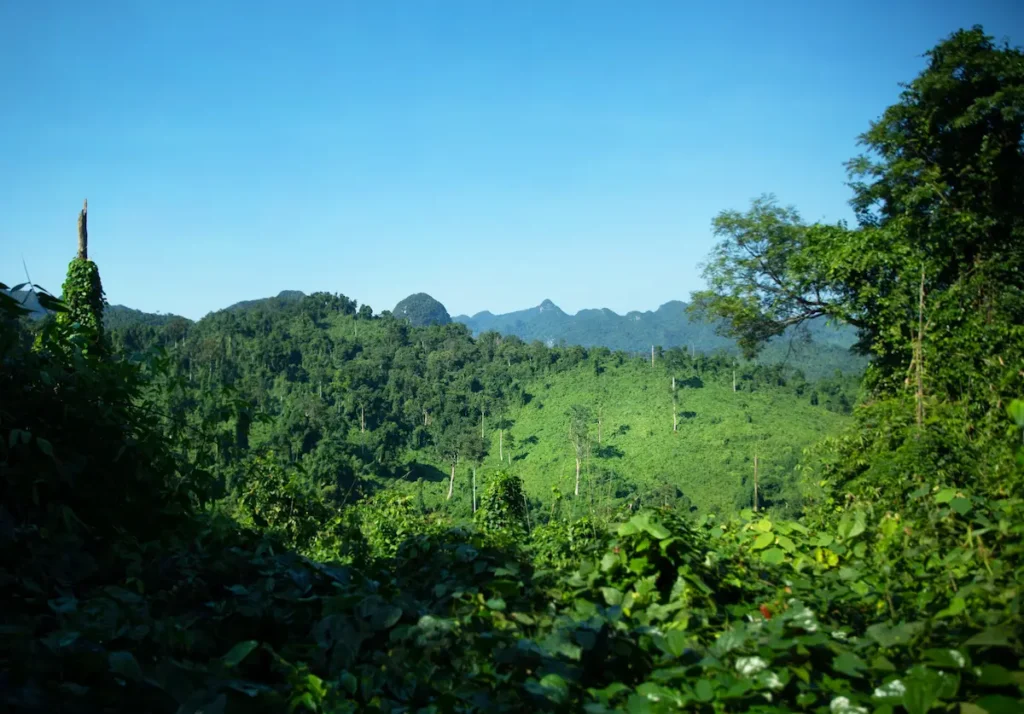
Abandoned Valley sits deep inside the core zone of Phong Nha-Ke Bang National Park — a 2,000-hectare stretch of primary rainforest that most visitors to Phong Nha have never heard of. No roads lead in. No phone signal reaches it. Just limestone karst, ancient jungle, clear streams, and cave systems that have been forming for over 450 million years.
Moc Nam Adventure is the only licensed operator in this area. No other company can bring you here.
1. What is Abandoned Valley?
Abandoned Valley — known locally as Thung Lũng Sinh Tồn — is a large mountain valley in the core zone of Phong Nha-Ke Bang National Park, in Quang Tri province (formerly Quang Binh). The starting point is Km17 or Km19 on the Western Ho Chi Minh Road.
The terrain is classic karst transition: high limestone massifs surround the valley on all sides, with steep cliffs dropping into the valley floor. Elevation within the area ranges from 10 to 400 metres. The entire zone sits below 800m, fed by water converging from multiple directions.
Where does the name “Abandoned Valley” come from?
According to local history, the A Rem ethnic minority once lived here — hunting, gathering, sheltering in cave systems, and trading with the outside world. Over time, due to war and increasingly difficult conditions, they relocated to flatter land better suited to community life. The name Abandoned Valley — Thung Lũng Bỏ Hoang in Vietnamese — refers to that departure, leaving behind a landscape that has remained almost entirely untouched ever since.
2. Geology and Formation
The cave systems inside Abandoned Valley formed over more than 450 million years of geological activity, beginning in the Paleozoic Era (Ordovician period onwards). The area sits across five geological formations — Dong Tho, Cat Dang, La Khe, Bac Son, and Mu Gia — creating an unusually diverse geological profile that includes limestone karst, sedimentary sandstone, and clay mountains.
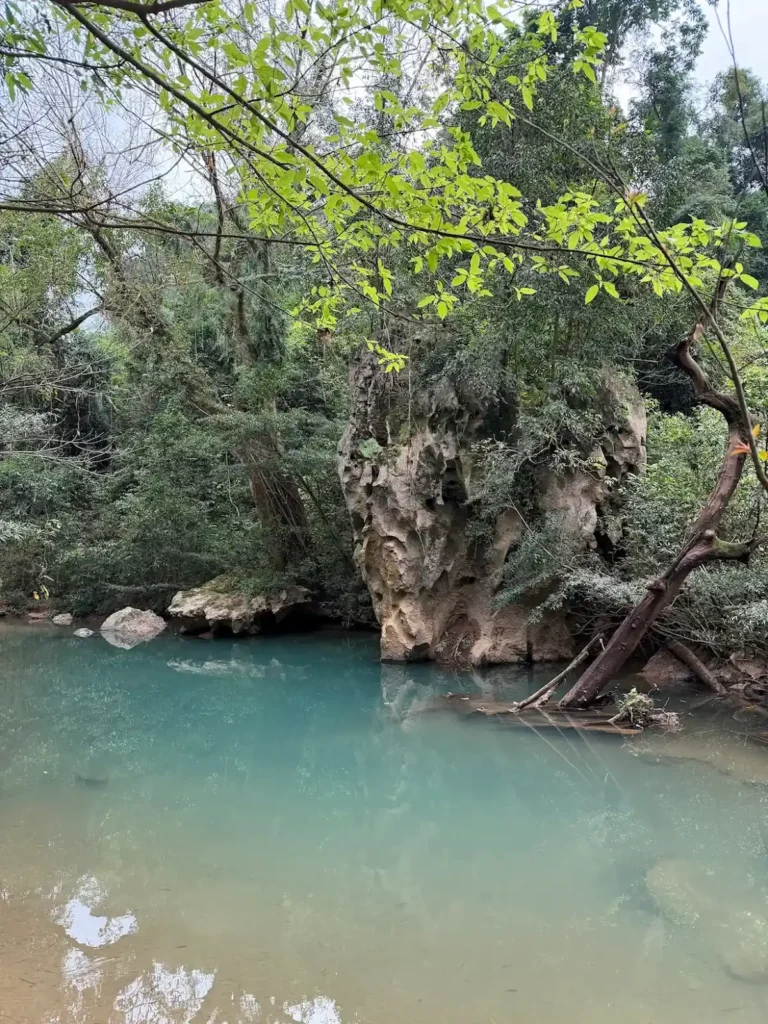
One detail that sets this valley apart: all the water emerging at E Cave’s entrance belongs to the Phong Nha river system — fed by underground streams from Son Doong Cave, the largest cave on earth. The flow originates near Ban Khe Rung at 570m elevation close to the Vietnam–Laos border, travels approximately 35km underground through the Son Doong, Nuoc Nut, and Tra Ang cave systems, then resurfaces at E Cave before passing through Dark Cave Exit and joining the Chay River. Tre Stream — the surface waterway connecting E Cave to Dark Cave Exit — runs nearly 2km and forms the ecological spine of the entire valley.
3. Ecosystem
Three-canopy forest
The forest inside Abandoned Valley is classified as humid tropical evergreen closed-canopy rainforest — a protected special-use forest within the National Park’s core zone, structured across three distinct canopy layers:
Upper canopy: Large hardwoods with trunk diameters of 30–70cm dominate — most notably the Dracontomelon duperreanum (Sấu), an ancient giant so wide it takes 8 to 10 people joining hands to encircle the trunk. These trees break through the main canopy to form the highest layer of the forest.
Mid canopy: Dense and layered, populated with Garcinia, Scaphium, and species from the Euphorbiaceae, Rutaceae, and Lauraceae families.
Ground layer: Thrives in moist microsites — Impatiens, Gesneriaceae species, and leafy shade plants covering the forest floor.
The valley is also home to the largest area of bamboo and rattan in Phong Nha-Ke Bang National Park, concentrated in the Tre Valley (Thung Tre) section — the reason locals once simply called this place “Bamboo Valley.”
Rare plant species
A specialist survey recorded 142 plant species across 63 families in the area. Among them: three species listed in Vietnam’s Red Book (Drynaria fortunei, Gynostemma pentaphyllum, and Garcinia oblongifolia); one species under Decree 32 on endangered plant management (Fibraurea tinctoria); and six species on the IUCN Red List, including Diplazium esculentum, Rothmannia cambodiana, Cassia ferruginea, Knema globularia, Knema pierrei, and Madhuca pasquieri.
Wildlife
The valley supports 100 recorded animal species — 36 aquatic, 14 reptiles, 38 amphibians, 4 mammals, and 8 birds. Five species appear in the Red Books:
- Ha Tinh langur (Trachypithecus hatinhensis) — Vietnam Red Book
- Stump-tailed macaque (Macaca arctoides) — Vietnam Red Book
- Marbled eel (Anguilla marmorata) — Vietnam Red Book; lives at depths of 20m inside E Cave
- White-cheeked gibbon (Nomascus leucogenys siki) — IUCN Red List
- Red-shanked douc langur (Pygathrix nemaeus) — IUCN Red List
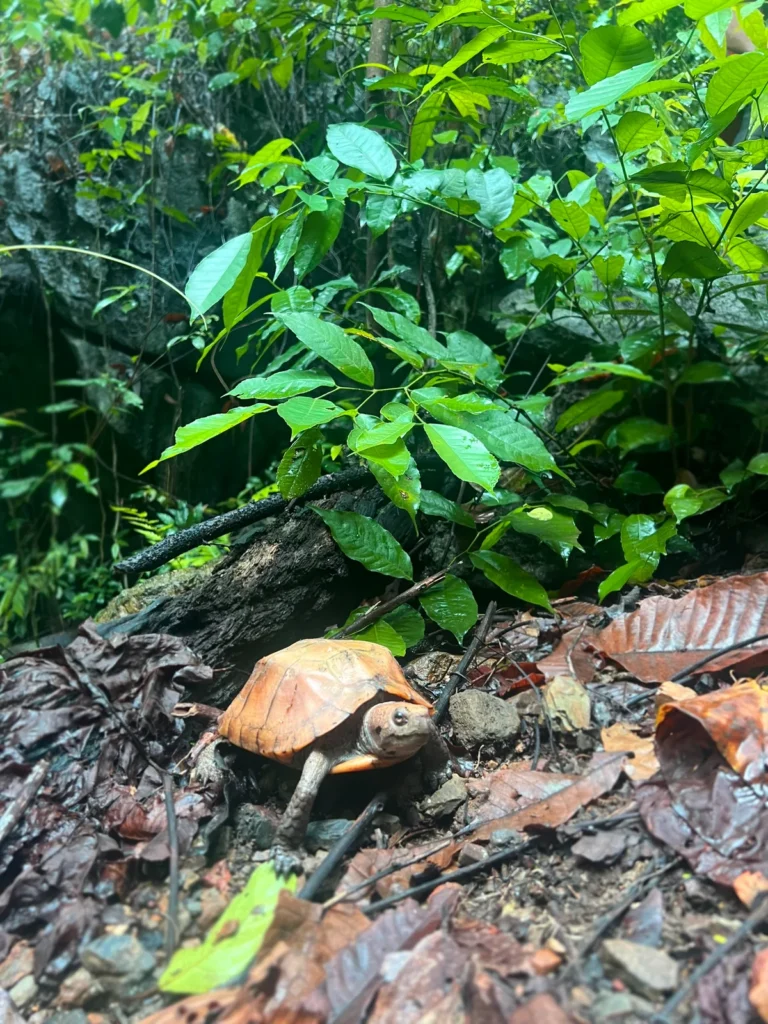
Walk quietly through the valley in the early morning or at dusk and you may hear the white-cheeked gibbon calling from the ridgeline — a sound that carries far through the stillness of primary forest. Three reptile species new to science have also been recorded exclusively in Phong Nha-Ke Bang, including the Phong Nha-Ke Bang bent-toed gecko.
4. The Cave Systems
Abandoned Valley is the only area in Phong Nha that contains all three cave types within a single 2,000-hectare zone — something rarely found anywhere in the world.
E Cave — Active water cave
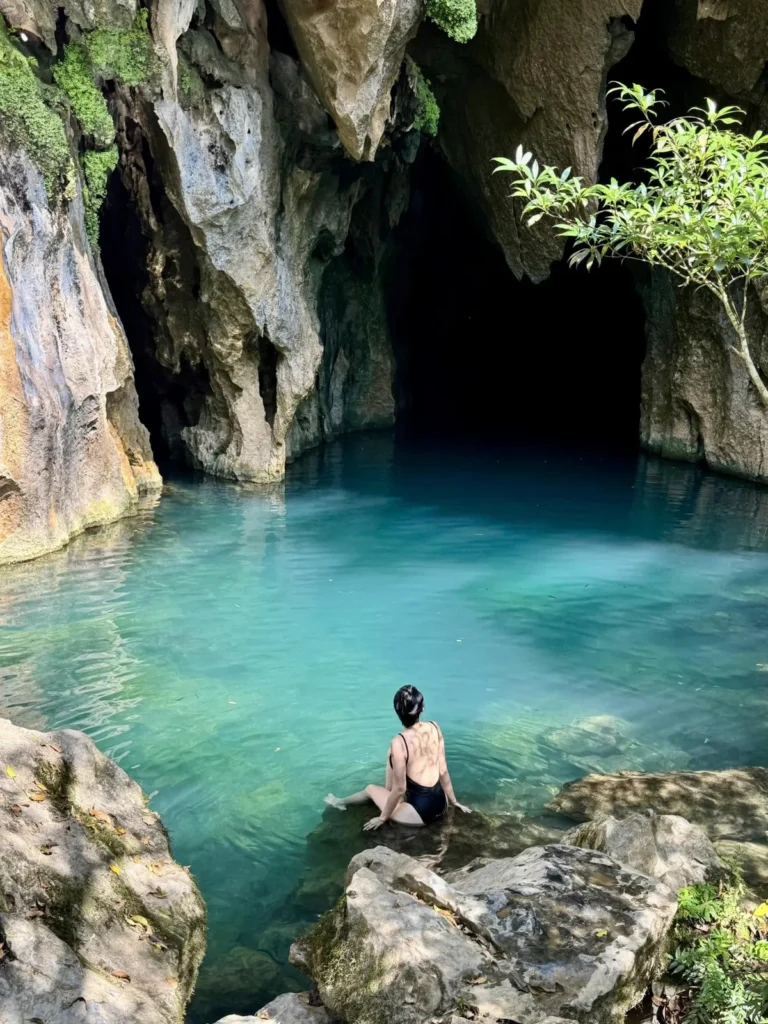
E Cave (locally known as Hang Thuy Cung — the Aquarium Cave) is an active cave: water still flows continuously through it from the Son Doong underground river system. Around 3km of the cave has been explored, reaching depths of 30m. Its defining feature is the water colour — turquoise-blue and crystal clear in summer, soft pastel blue in winter, and an unusual reddish-brown during flood season. Water temperature holds between 18–22°C year-round. Visitors paddle SUP 1.2–1.5km into the cave to see 400-million-year-old tetracoral fossils covering the ceiling and walls. For a full breakdown of what to expect, read our complete guide to E Cave Phong Nha.
Golden Cave — Fossil cave
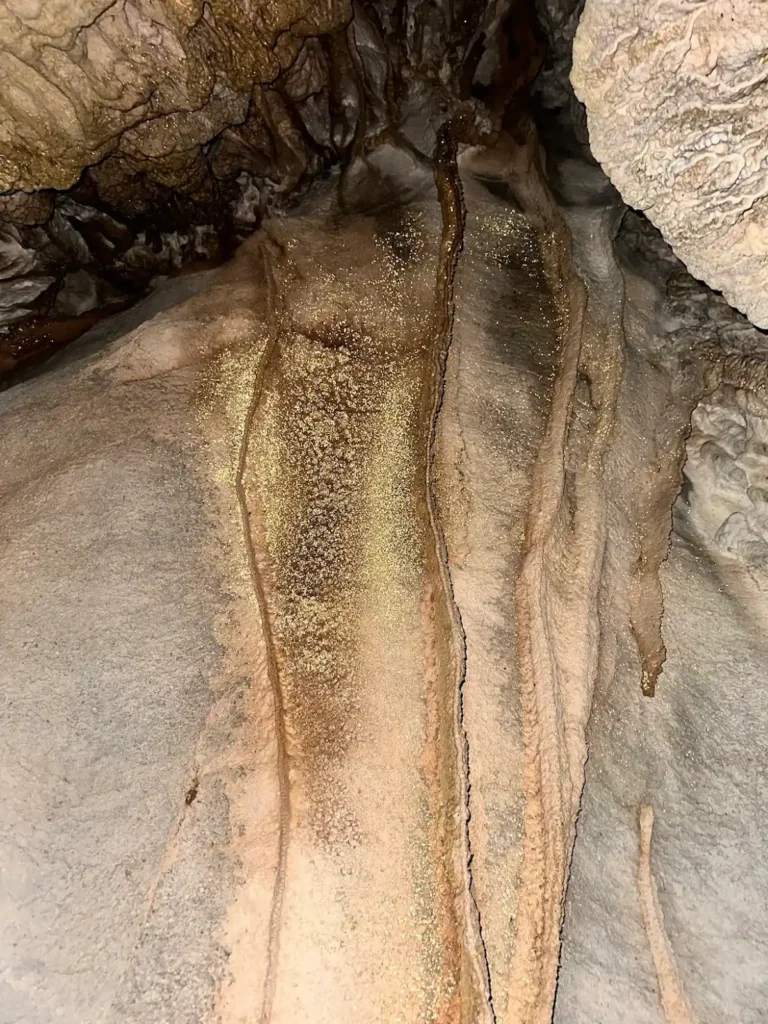
Golden Cave is a fossil cave — lifted above the water table by tectonic activity, leaving it dry. Total length is nearly 2km, with a depth exceeding 100m. The entrance stands over 35m high, with a near-perfectly symmetrical rectangular opening that gives it the feel of a temple gateway in the forest. Its defining feature is the “golden room” — a chamber filled with rare gold-tinted stalactites found nowhere else in Phong Nha, alongside moss-covered formations at the entrance, cave pearls, flowstone terraces, and stalactite curtains.
Dark Cave Exit — Mixed cave
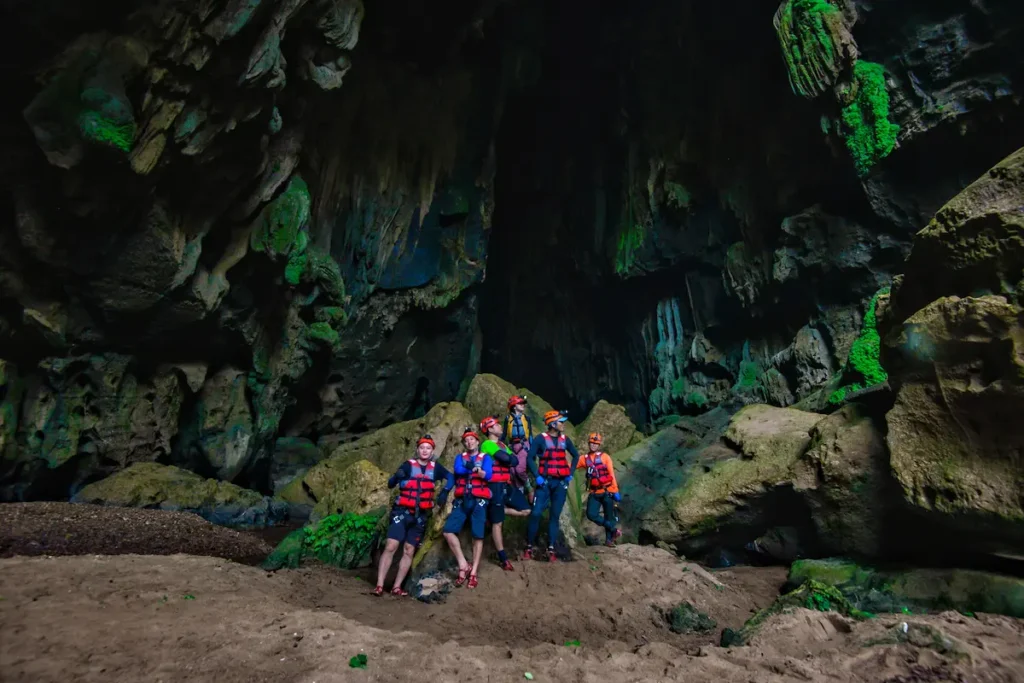
Dark Cave Exit is a mixed cave — its main passage still carries an active underground river, while sections closer to the surface are dry and fossilised. A vast boulder field sits at the entrance, formed 400 million years ago when tectonic forces separated it from the cave ceiling, creating the wide open-air clearing you pass through today. Inside, visitors navigate in darkness with headlamps, swim through underground pools, and cross sections of sharp underground river rock. The cave is a nesting ground for swifts and bats that thrive in total darkness.
5. Best Time to Visit
Average temperature across the valley is 23–25°C. The hot season runs April to October; the cool season from November to March averages around 20°C.
Best conditions: February to August — clear weather, E Cave water at its most vivid turquoise, ideal for GoPro underwater footage and children from age 5.
Rainy season (September–January): Tours still run when conditions are safe. E Cave takes on a distinctive soft blue-grey colour in the cooler months — beautiful in a different way. Underwater GoPro footage may be cancelled depending on water clarity.
6. Tours in Abandoned Valley
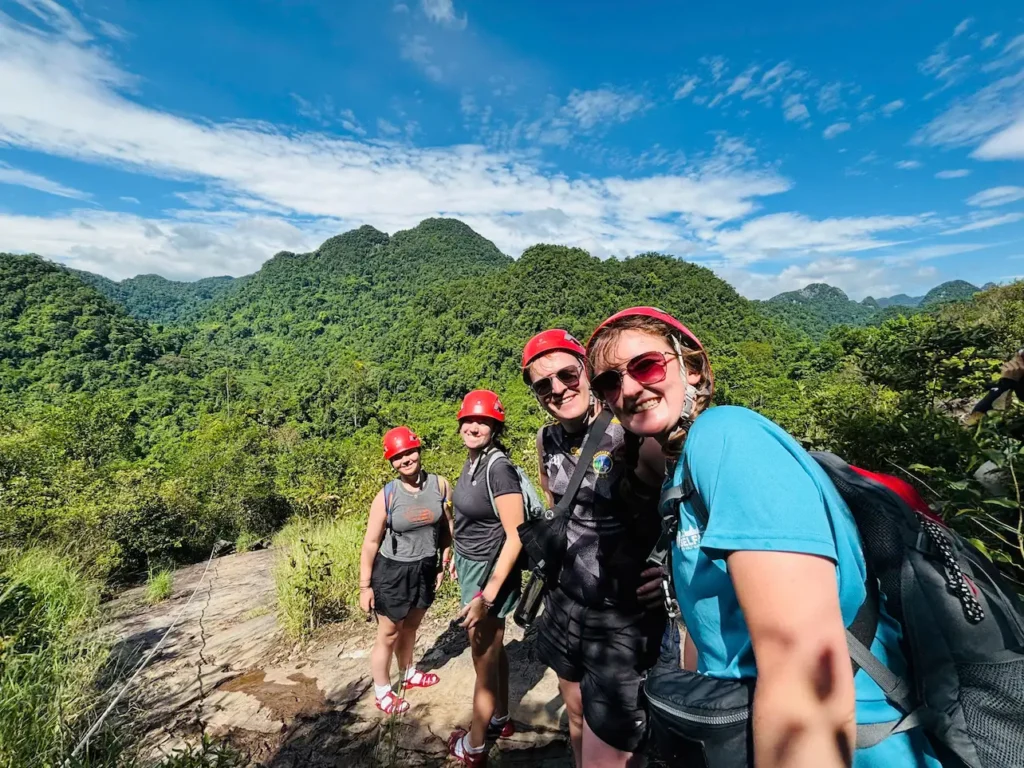
All tours in Abandoned Valley are exclusively operated by Moc Nam Adventure — no other company is licensed to bring guests into this area. There are currently four itineraries available:
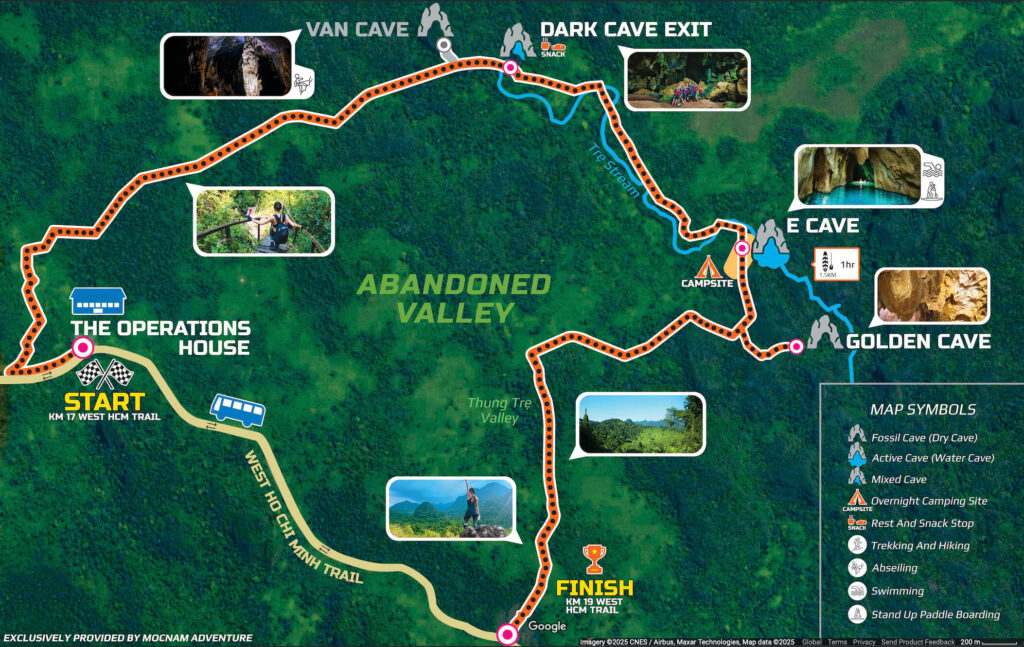
- 1-Day E Cave Tour (AB-E) — 7.5km, jungle trekking + SUP inside E Cave. From age 5 (dry season). Moderate difficulty. From $68.25/person.
- 1-Day Golden Cave & E Cave Tour (AB-GE) — 9km, fossil cave with gold stalactites + turquoise water cave. From age 7 (dry season). Challenging. From $81.90/person.
- 2-Day 1-Night Camping at E Cave (AB-E2) — 11km, overnight jungle camp at E Cave. From age 10. From $156/person.
- 2-Day 1-Night 3-Cave Tour (AB-DEG2) — 15km, all three cave types in one journey. The most complete exploration of Abandoned Valley. From age 10. From $226.20/person.
7. Frequently Asked Questions
How is Abandoned Valley different from other Phong Nha caves?
Phong Nha Cave, Paradise Cave, and the commercial Dark Cave all have vehicle access and large visitor numbers. Abandoned Valley has no road — you walk 3–5km through primary jungle to get there. The entire area is protected core-zone forest, strictly managed. No engines, no crowds — just forest and caves exactly as they’ve always been.
Who can enter this area?
Only guests on tours operated by Moc Nam Adventure. There is no way to enter Abandoned Valley independently — it is an exclusively licensed zone, monitored by forest rangers and the National Park Management Board.
Do I need trekking experience?
The 1-day E Cave tour requires no prior experience — exercising 1–2 times per week is enough. The 2-cave and overnight tours require better fitness and some experience on rough terrain. Moc Nam provides all equipment, guides, and safety assistants throughout every itinerary.
How does Moc Nam operate here?
Moc Nam holds a licensed concession for eco-tourism in Abandoned Valley. Every route has been surveyed by specialists, approved by the National Park Management Board, and is regularly maintained. The company runs active wildlife conservation and rescue programmes, prioritises local staff hiring, and supports communities in the buffer zone.
Read more about the caves inside Abandoned Valley: